Two days before New Year’s Eve, I was mid-project and suddenly couldn’t log in. Here’s what I found after a week of testing alternatives.
I’d been using SMS-Activate for about two years. Reliable enough, familiar interface, prices I’d stopped thinking about because they were so low. It was just a tool, the way a browser extension is a tool — you use it, it works, you move on.
Then, in late December 2025, I tried to access my account and got a static page instead of a dashboard.
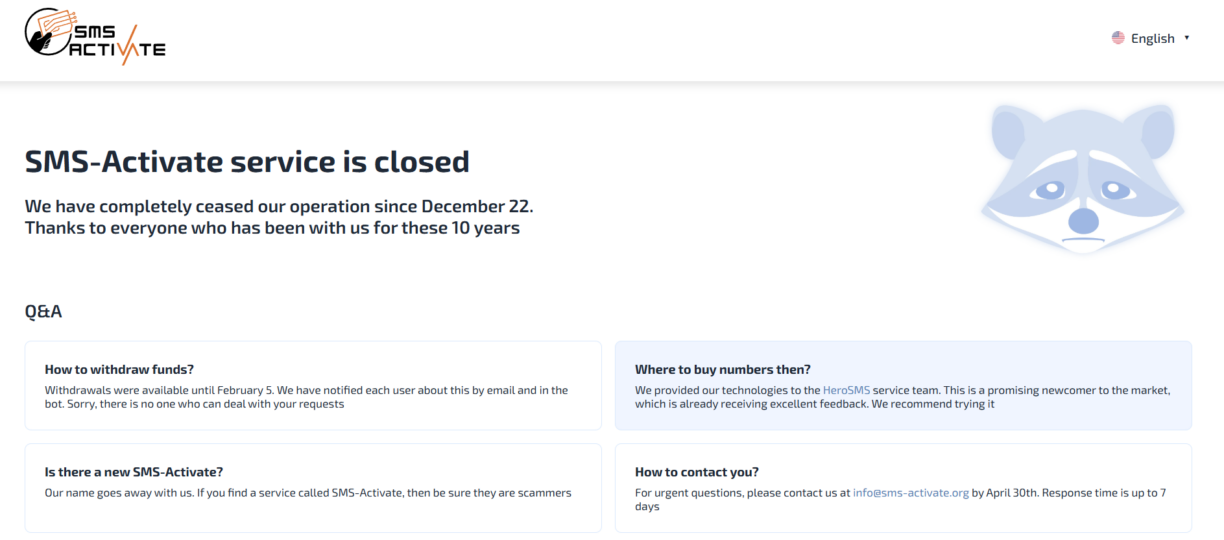
“SMS-Activate service is closed. We have completely ceased our operation since December 22.”
No warning email. No migration window. Just a goodbye message and a Q&A about withdrawing remaining balances — with a $30 minimum withdrawal threshold that, for a lot of users, was conveniently just above whatever they had left.
I had an active project that relied on SMS verification at scale. I needed a working replacement in hours, not days. Over the following week, I tested every service I could find. This article is the result of that research — what SMS-Activate was, why it shut down, and the ten best virtual number services you can actually use in 2026.
What Was SMS-Activate?
For anyone who wasn’t a user, some context: SMS-Activate (sms-activate.ru) was the dominant platform for virtual phone number rentals and SMS activations globally. Launched in 2015, it grew into the largest service of its kind — covering 180+ countries, supporting thousands of platforms, and handling millions of activations per month.
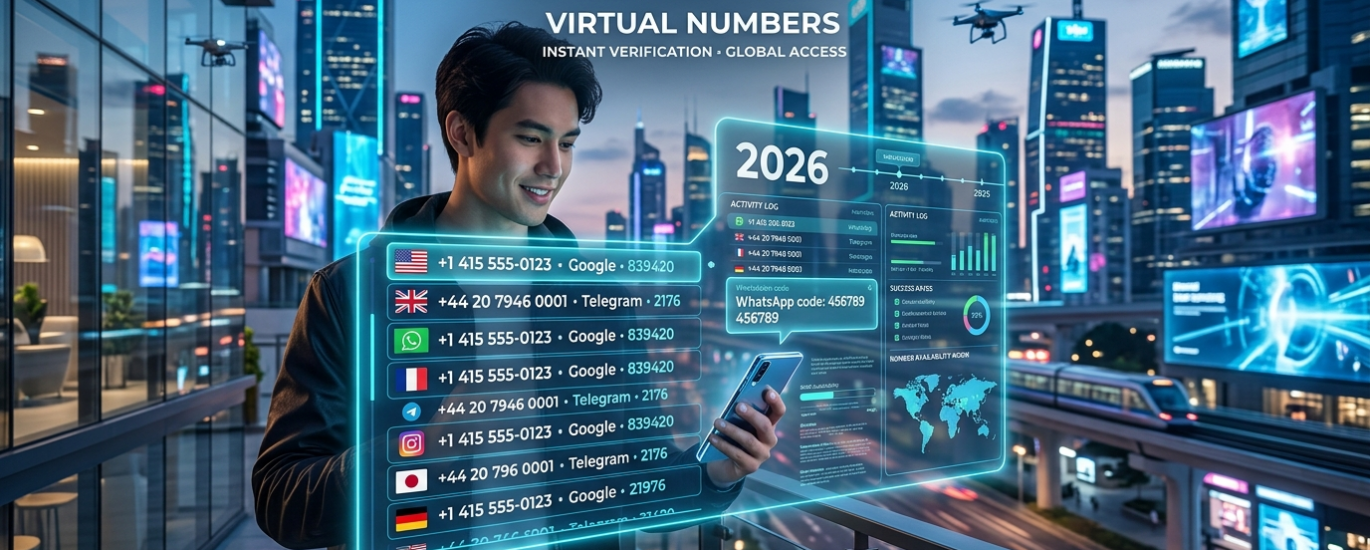
The core use case is simple: you need a phone number to verify an account on Google, Instagram, Telegram, WhatsApp, or any other platform. You don’t want to use your real number. You rent a virtual number for a few seconds, receive the code, done. The number disappears. No spam calls afterward.
Developers built automation scripts against the SMS-Activate API. Marketers ran multi-account research with it. Privacy-conscious users registered for apps without handing over a permanent number. It was the default tool for anyone who needed SMS verification at scale — or even just occasionally.
Why Did SMS-Activate Shut Down?
The official statement was vague: the team cited operational circumstances but didn’t elaborate. Based on what circulated in developer communities afterward, a few factors converged:
- Platform crackdowns on virtual numbers. Google, Meta, and Telegram spent 2024–2025 significantly upgrading their VoIP and virtual number detection. The economics of the business shifted as more numbers got blocked on first use.
- Payment processor pressure. Several crypto and card processors had been distancing themselves from services that enabled bulk account creation.
- Regulatory environment. Multiple sources noted that Russian-operated tech services faced intensified legal and banking pressure through late 2025.
The result was a sudden closure on December 22, 2025, after exactly ten years in operation. The platform’s Trustpilot rating collapsed to 2.2 in the weeks after — largely from users who lost balances below the $30 withdrawal minimum and from people who’d received no advance notice.
One piece of the shutdown was constructive: the SMS-Activate team stated on their farewell page that they had transferred their technical infrastructure to HeroSMS (hero-sms.com), calling it “a promising newcomer to the market.” That claim turned out to be meaningful, as I’ll explain below.
How I Evaluated Replacements
I tested ten services over seven days with a consistent methodology:
- Coverage — how many countries and services supported.
- Success rate — did the code actually arrive? I ran at least 8 activations per platform, across Google, Instagram, Telegram, and WhatsApp.
- Speed – average time from number purchase to code delivery.
- Price accuracy – did the displayed price match what was charged?
- API quality – for services with developer documentation, how much rework would be needed to migrate existing scripts?
Services were ranked based on a weighted combination of all five, with success rate carrying the highest weight. The cheapest number in the world is worthless if the code never arrives.
No services headquartered in Russia were included — the SMS-Activate situation demonstrated clearly why single-jurisdiction dependency on sanctioned regions is a structural risk.
The Top 10 SMS Activation Services in 2026
1. HeroSMS — hero-sms.com
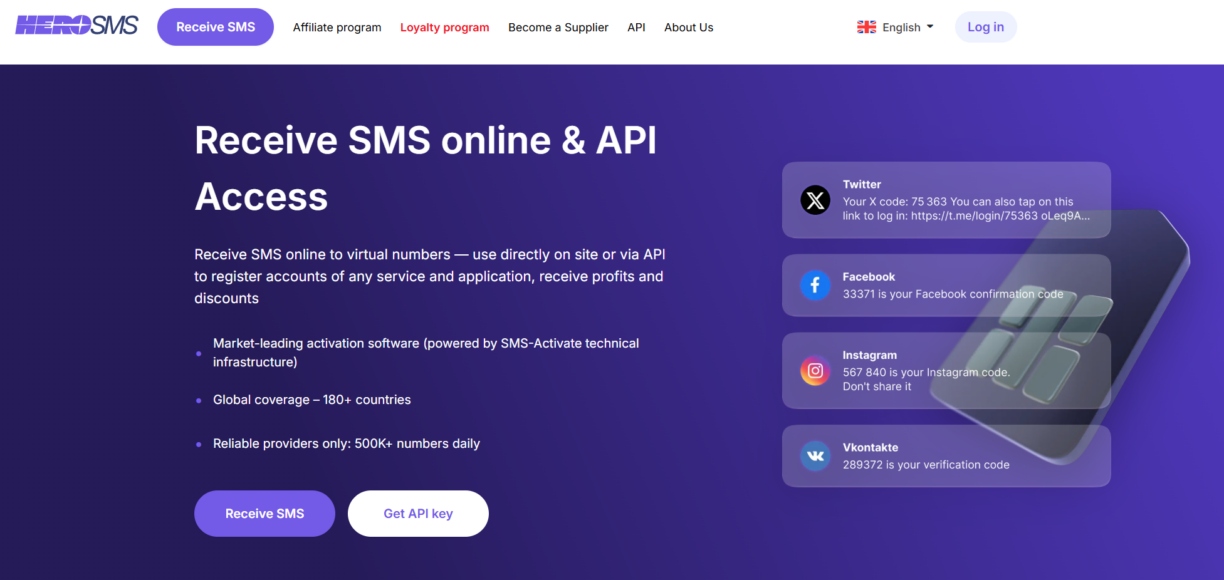
This one requires direct explanation, because the relationship to SMS-Activate is not just marketing.
The SMS-Activate shutdown page explicitly stated that their technologies were transferred to the HeroSMS team. HeroSMS runs on the same technical infrastructure — the same delivery systems, the same supplier networks spanning 180+ countries, the same activation logic that SMS-Activate users knew. The team that built the original platform is the team behind HeroSMS.
In practice, this means the familiar flow works identically: select service, pick country, get number, receive code. But there are measurable improvements.
Coverage: 180+ countries, 700+ services. There’s an “Any Other” option that handles platforms not explicitly listed — useful for niche or regional services.
Prices (verified from the platform):
- OpenAI: from $0.0075
- Amazon: from $0.0135
- Facebook / Instagram+Threads: from $0.015
- Google: from $0.02
- WhatsApp: from $0.09
Speed: During my testing, codes arrived in an average of 12–20 seconds on popular services. Telegram was nearly instant in most attempts. The platform adds 500,000+ new numbers daily, which showed in practice — I rarely encountered recycled or flagged numbers even on strict platforms.
API: Mirrors the SMS-Activate API structure closely. For developers who had scripts built against SMS-Activate, the migration time was under 30 minutes in my case. The documentation covers webhooks, real-time event notifications, and all standard activation flows.
Loyalty program: Five-tier system offering discounts up to 40% based on cumulative top-ups — meaningful for higher-volume users.
Business registration: Danver LLC (EIN 41-4260924), incorporated in Cheyenne, Wyoming — a US entity, which adds a layer of legal accountability that offshore competitors lack.
Payment: Cryptocurrencies, bank cards, bank transfer, E-Wallet, cash, and mobile money — one of the wider payment selections in the category.
My results: 31 out of 33 activations succeeded. The two failures were refunded automatically. Average delivery: 16 seconds.
For anyone migrating from SMS-Activate, HeroSMS is the smoothest path — same infrastructure, competitive pricing, and the largest daily number refresh I encountered across all ten services tested.
2. SMSPool — smspool.net
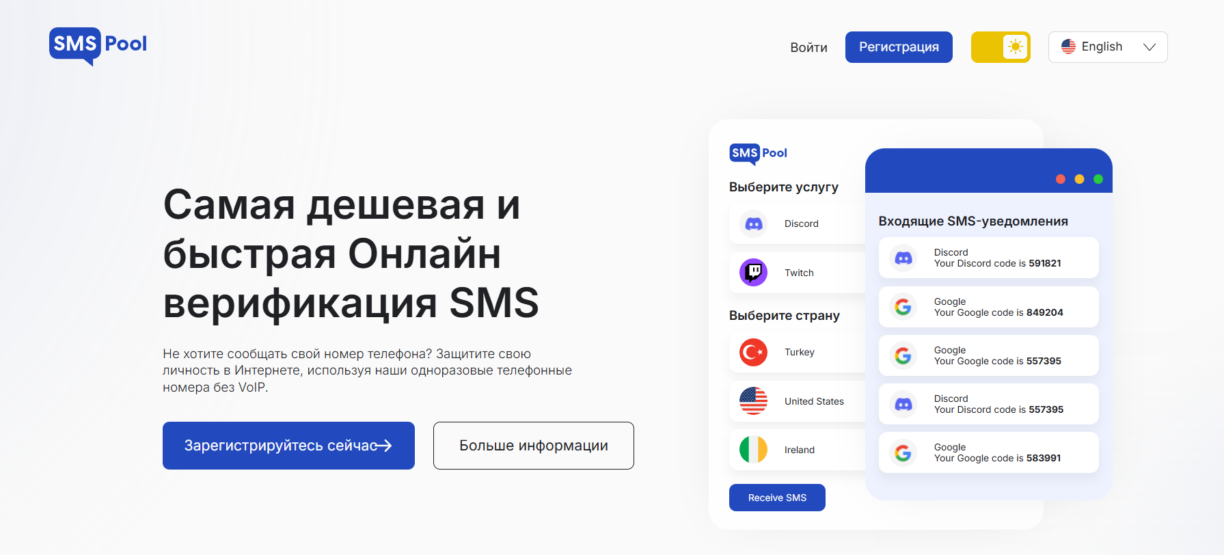
SMSPool carved out a distinct niche by focusing exclusively on non-VoIP numbers — real SIM-backed numbers that platforms like Google, Tinder, and financial apps can’t distinguish from a regular mobile phone. As detection algorithms improve, this distinction matters more each year.
Coverage: 150+ countries, 1,200+ services.
Pricing: starts at $0.02 per number. WhatsApp runs around $0.32, Microsoft around $0.20. Most verifications land between $0.09 and $0.50 depending on platform and country.
Minimum deposit: $3 — low enough to test without meaningful financial risk.
Payment: Crypto and credit cards via Stripe. The card option makes it accessible without cryptocurrency setup.
Standout feature: Automatic refunds on failure. Many services require manual refund requests; SMSPool credits failed numbers instantly.
My results: 24 out of 27 activations succeeded. Success rate on strict platforms like Tinder was noticeably higher than on VoIP-based competitors. Google verifications worked on first attempt in 7 of 8 tries.
Watch out for: Google/Gmail numbers have acknowledged reliability limitations. Stock on popular country/platform combinations occasionally sells out during peak hours.
3. TextVerified — textverified.com
TextVerified is a specialist service, and it earns that positioning. Numbers come exclusively from major US carriers — no VoIP, no virtual infrastructure, just real carrier-based lines that behave identically to a regular cell phone from any platform’s perspective.
Coverage: US-only. Not the right tool for international numbers.
Pricing: From $0.25 per verification. Rentals from $1.50/day. At $0.80–2.00 for a Google verification, it’s 2–4x more expensive than budget alternatives.
My results: 14 out of 14 US activations succeeded, including on platforms that had rejected numbers from every other service I tested — Tinder, Cash App, and one fintech app that blocks virtually every non-carrier number.
When to use it: Exclusively for US platforms that reject numbers from everywhere else. At $0.25+, it’s not sensible for routine Instagram verifications. For the specific case of strict US platforms, it’s the only option that consistently works.
4. PVAPins — pvapins.com
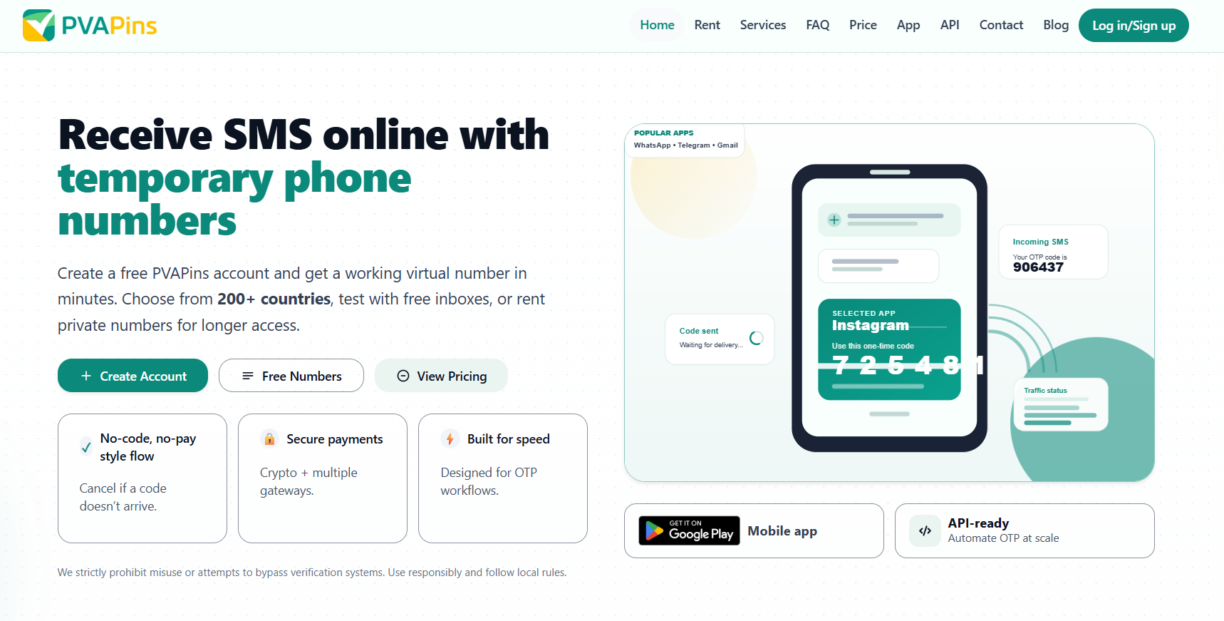
PVAPins covers 200+ countries with private, non-VoIP numbers sourced from real cellular carriers. The “No-Code, No-Pay” policy means your balance isn’t deducted unless a verification code is successfully delivered — meaningful protection against wasted spend.
Pricing: Higher than budget services, competitive with mid-tier options. Varies by platform and country.
Rental options: 72 hours to 30 days — flexible for both quick verifications and ongoing access.
API: Full documentation for bulk SMS verification workflows.
My results: Above-average success rates on Instagram and Google compared to VoIP-based alternatives. The no-charge-on-failure policy reduced the practical cost of failed attempts.
Watch out for: Number availability fluctuates for less common country/platform combinations.
5. SMS-MAN — sms-man.com
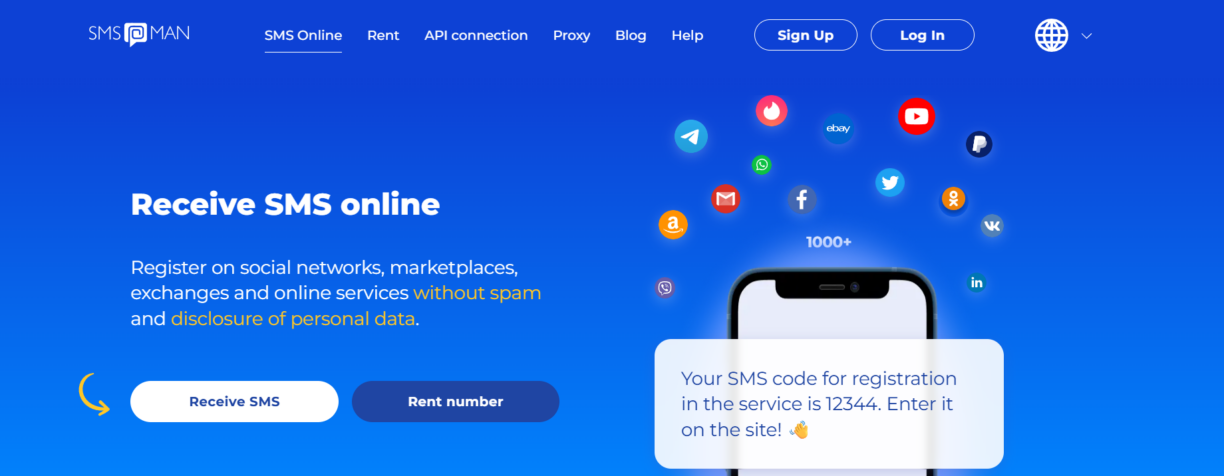
SMS-MAN is the volume play on this list. The platform supports 1,500+ platforms across 270+ countries — the widest service catalog available.
Pricing: From $0.05 per activation.
Payment flexibility: PayPal, credit cards, Apple Pay, and cryptocurrency — the most payment options of any service here.
Rental: Up to one month.
My results: Out of 34 activations, 27 delivered successfully. The notable issue: 4 numbers were accepted by the API but rejected by the target platform as already-used. Building detection for this “silent failure” mode adds engineering overhead in automated pipelines.
Best for: Niche or regional platforms that other services don’t list. When a client needs verification on a local classifieds site or a country-specific payment app, SMS-MAN usually has it. Worth keeping as a specialty fallback.
6. 5SIM — 5sim.net
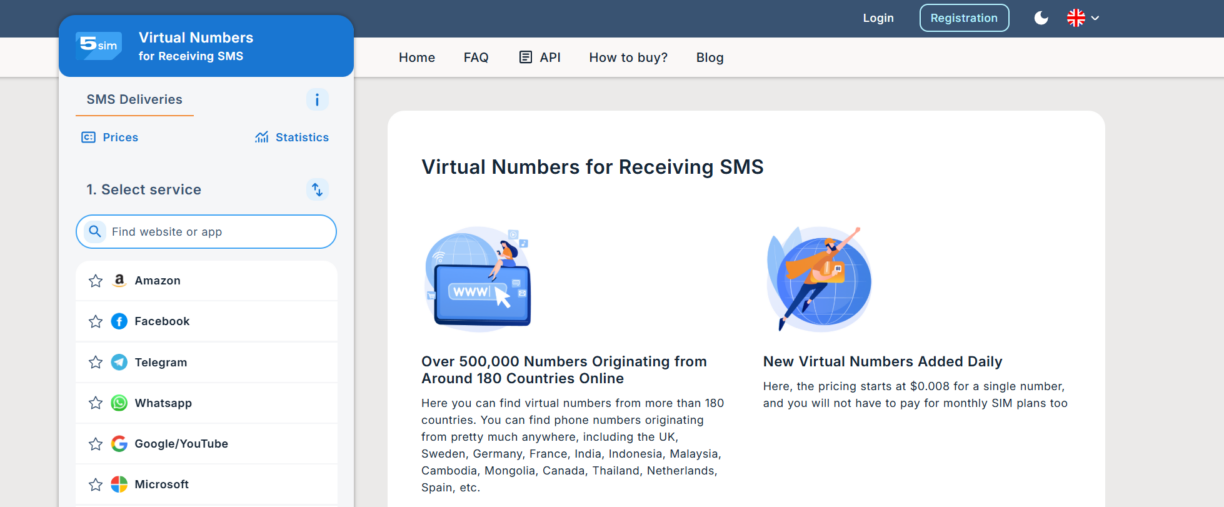
5SIM offers the lowest entry price I found — starting from $0.008 per number. Coverage spans 180+ countries with substantial inventory across popular services.
Pricing: From $0.008, typically $0.01–0.05 for common platforms.
Refund policy: Automatic refund if a code is not received.
API: Available with developer documentation.
My results: Success rate was inconsistent — roughly 72% across all attempts, with Telegram being the weakest performer. For straightforward platforms like Facebook or email services, 5SIM worked reliably. For stricter services, the inconsistency became a problem.
Bottom line: Good as a cost-sensitive secondary provider. For high-stakes activations where failure has downstream costs, the inconsistency is a risk worth pricing in.
7. OnlineSIM — onlinesim.io
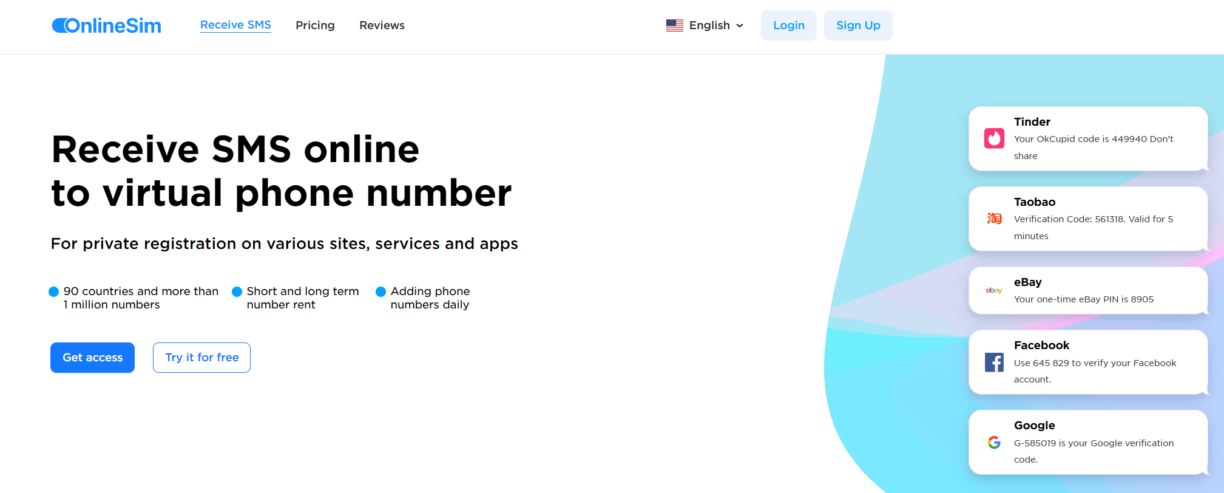
OnlineSIM has been operating since 2013, giving it one of the longest track records in the space. Its real differentiator is the rental model — numbers can be held from 1 day to unlimited duration, accepting SMS repeatedly during the rental period.
Coverage: 90+ countries (narrower than the top-tier options).
Pricing: One-time activations from $0.01, rentals from around $3/day.
Payment: Cards, crypto, Perfect Money, phone balance.
My results: 15 out of 18 activations succeeded. European and US numbers performed well; Southeast Asian and Latin American coverage had gaps.
Best for: Accounts that need ongoing 2FA access over days or weeks. No other service on this list matches the rental flexibility.
8. SMSPVA — smspva.com
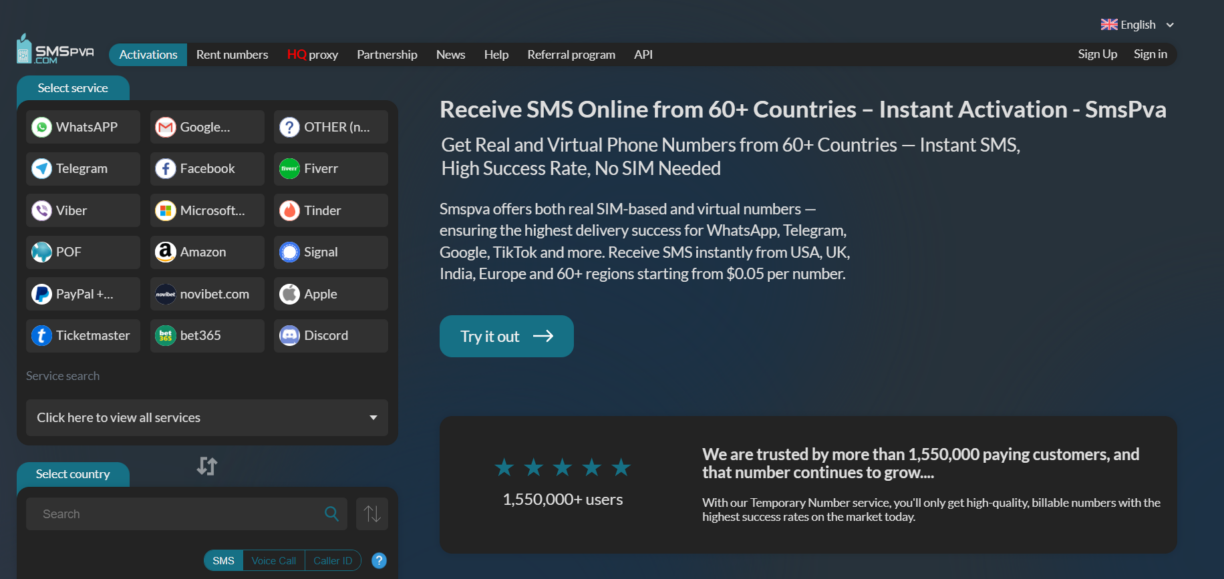
SMSPVA has operated since 2013 and offers a dual approach: VoIP numbers (budget) and real SIM cards (premium). The ability to choose between the two in the same interface is useful for matching cost to requirement.
Coverage: 60+ countries — the narrowest on this list.
Pricing: From $0.05.
Standout: Purchases can be made without registration, which reduces friction for one-off verifications.
Watch out for: Community reviews describe many numbers as “burned” — already used on popular services. Working through flagged numbers on strict platforms requires patience.
9. Grizzly SMS — grizzlysms.com
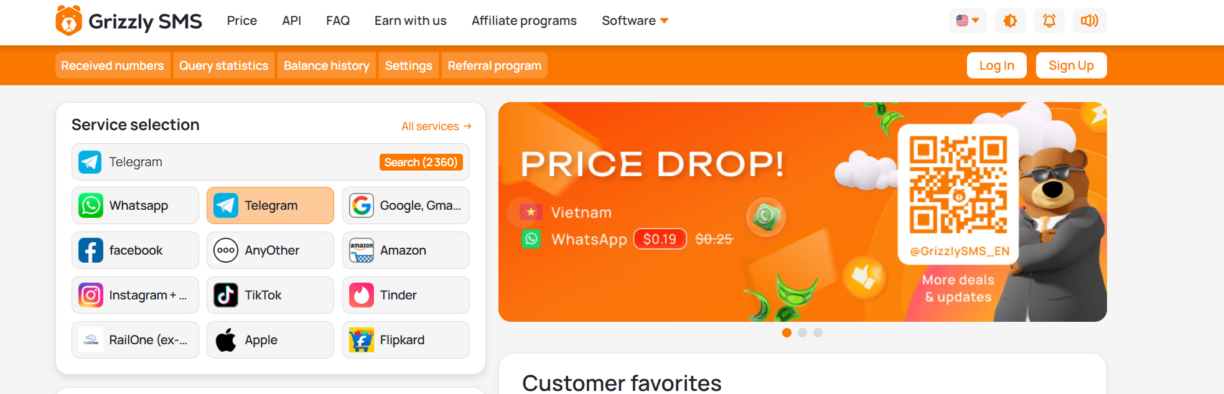
Grizzly SMS is the most visually polished service on this list, and the one with the fastest customer support I encountered — under 15 minutes via live chat in every test message I sent. The platform is registered in London with verifiable public registration details.
Coverage: 100+ countries.
Pricing: From $0.04.
My results: 13 out of 16 activations succeeded. Speed was good (20–30 seconds average), but stock inconsistency via API — where availability shown on the web interface didn’t match what the API returned — caused friction in automated workflows.
Best for: Users who prioritize support quality and interface clarity. As a backup provider, it’s solid.
10. Anosim — anosim.net
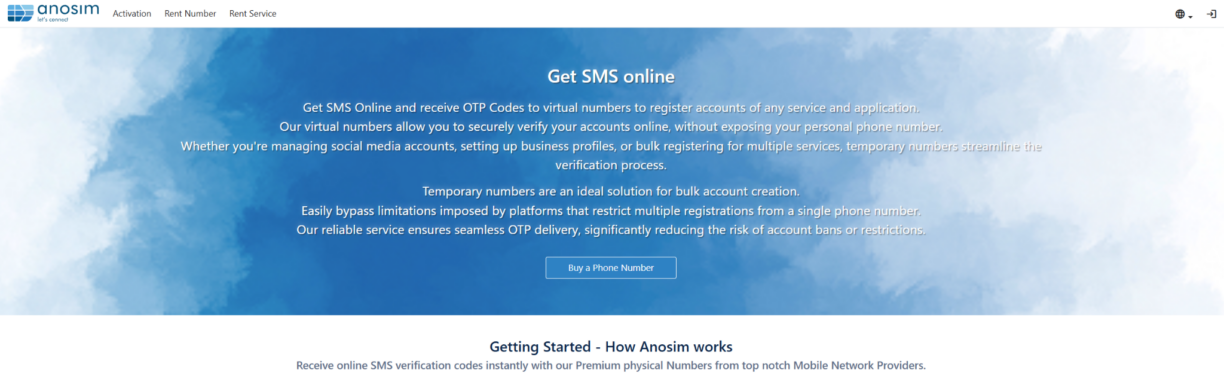
Anosim rounds out the list with an emphasis on physical SIM card rentals and anonymity. The service handles both temporary OTP numbers and persistent rentals, with support for Telegram and WhatsApp among others.
Coverage: More limited than the top-tier options.
Best for: Users with specific privacy requirements where physical SIM backing matters above all else. Less suitable as a general-purpose primary provider due to thinner documentation and smaller catalog.
Quick Comparison
| Service | Countries | Starting Price | Non-VoIP | API | Payment Options |
| HeroSMS | 180+ | ~$0.008 | Yes | Yes | Crypto, Card, Bank, E-Wallet |
| SMSPool | 150+ | $0.02 | Yes | Yes | Crypto, Card |
| TextVerified | US only | $0.25 | Yes | Yes | Crypto, Card |
| PVAPins | 200+ | Varies | Yes | Yes | Crypto, Card |
| SMS-MAN | 270+ | $0.05 | Yes | Yes | PayPal, Card, Crypto |
| 5SIM | 180+ | $0.008 | Partial | Yes | Crypto, Card |
| OnlineSIM | 90+ | $0.01 | Partial | Yes | Card, Crypto |
| SMSPVA | 60+ | $0.05 | Partial | Yes | Card, Crypto |
| Grizzly SMS | 100+ | $0.04 | Yes | Yes | Crypto, Card |
| Anosim | Limited | Varies | Yes | Limited | Crypto |
What the SMS-Activate Shutdown Actually Taught Us
After running 200+ activations across ten platforms in a single week, a few things became clear that weren’t obvious before.
API compatibility compounds. The developers who had scripts built against the SMS-Activate API weren’t just losing a service — they were losing years of tested, reliable code. Any platform that mirrors the original API structure inherits a massive head start. HeroSMS does this by design, which is not a coincidence given its technical origin.
Success rate math is not intuitive. The difference between 97% and 75% sounds like a small gap. At 200 activations per week, it means 50 failures — each requiring retry logic, burning time, and often costing the same as a successful activation. The “cheaper” service frequently ends up more expensive in practice.
The SMS-Activate closure is a reminder, not an anomaly. Services in this niche can disappear with minimal warning and difficult refund conditions. The $30 withdrawal minimum burned a meaningful number of users. Building workflows around a single provider — especially one operating outside your legal jurisdiction — is a single point of failure. Primary provider plus one credible backup is operational hygiene, not over-engineering.
For former SMS-Activate users searching for a familiar experience: HeroSMS is the closest thing to what existed before December 2025, built on the same foundation and meaningfully improved. For everyone else, this list covers every major use case the market currently offers.
Pricing and availability reflect testing conducted in early 2026. Verify current rates directly on each platform before committing.